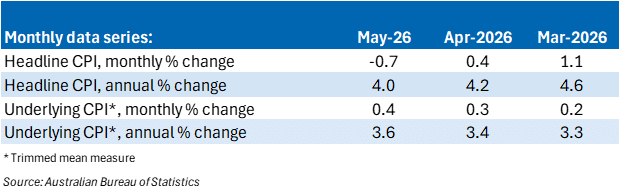
Headline inflation fell 0.7% in May with the annual rate easing to 4.0%. This decline was largely driven by an 11.9% fall in automotive fuel prices, reflecting lower global crude prices over the month.
The RBA will pay most attention to the underlying measure of inflation, the trimmed mean. Here, the monthly growth rate picked up 0.4%, exceeding consensus forecasts for a more modest rise of 0.3%. The annual underlying inflation rate stepped up to 3.6%, from 3.4% in April. This suggests second-round effects from higher fuel and material costs, linked to the Middle East conflict, are starting to emerge more clearly. It will be enough to keep the RBA counting its worry beads.
While Brent crude and urea prices have fallen materially in recent weeks, there’s a risk that businesses do not unwind earlier price increases. In that case, inflation could prove more persistent and take longer to return to the RBA’s target band, potentially requiring further policy action.
Moreover, the stickier element of inflation, services inflation, increased to 3.7% in the year to June. and remains sticky. Since July 2025, services inflation has consistently sat above the upper end of the RBA’s 2% to 3% target band.
In our view, the quarterly inflation data due next month will show a 0.9% increase in the June quarter and 3.7% over the year. This remains too high and is likely to keep the prospect of another rate rise in play for the September quarter.
At the same time, the flow of softer activity data, including weaker employment growth and a slowdown underway in housing, suggests the bar for further tightening has risen. Even so, one additional rate increase remains a live possibility.
We recently considered whether to change our long-held call for one more rate rise in August this cycle. While we see a higher hurdle for another rate rise, we believe there’s still a risk of one more rate hike, that would see the cash rate peak at 4.60%. This latest inflation data supports our view.


Across the inflation basket, eight of the eleven categories are still growing at an annual pace above the RBA’s target band. The usual offenders – housing, education, health and insurance – continue to feature prominently.
The largest contributor to annual inflation was housing. Within this category, the main drivers were electricity, new dwellings and rents. The Australian Bureau of Statistics reported that project home builders in most cities are raising base prices to pass through higher input costs. In terms of the statistics, new dwelling prices rose 0.9% in the month, lifting the annual rate to 5.6%, the highest level since mid 2023.